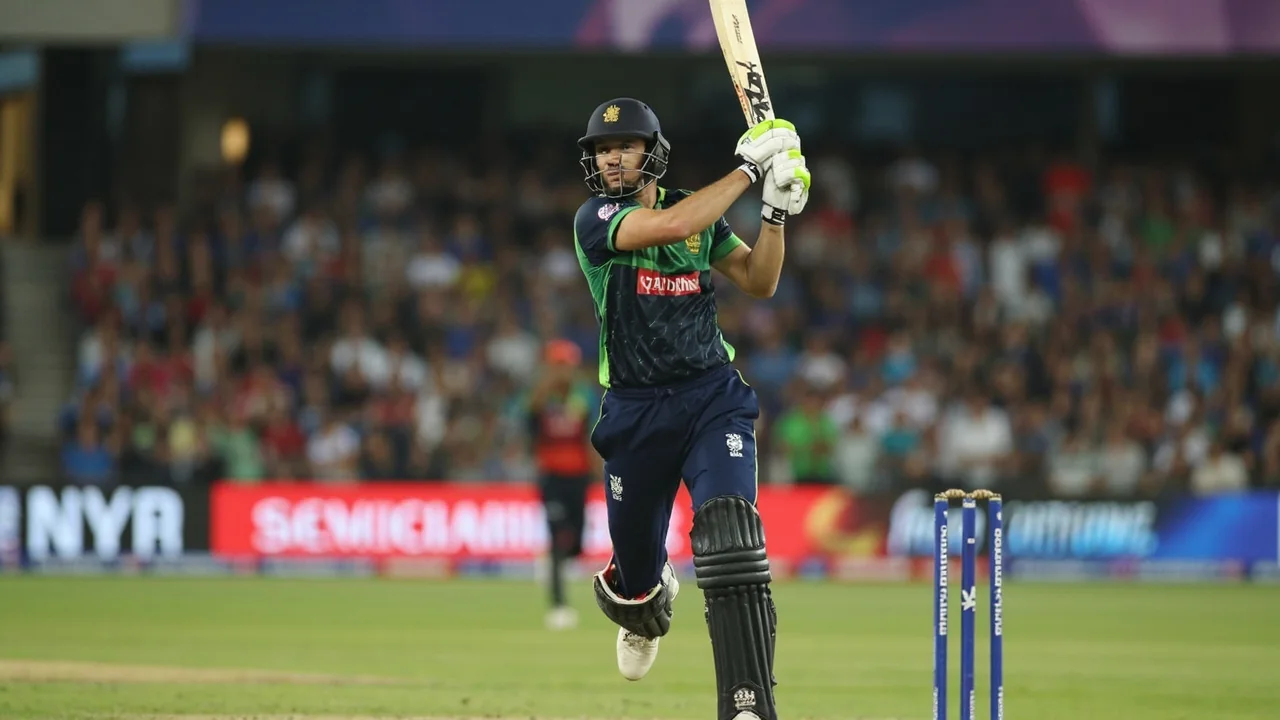
ENG-W vs SA-W, ICC Women's T20 World Cup 2nd Semi-Final: Dream11 XI, Oval pitch and the captain pick the desk would lock in
A retrospective from the eve of the Thursday 2 July 2026 semifinal at Kennington Oval. England Women went through the group stage unbeaten and arrived as the form side; South Africa Women finished second in Group A with four wins from their campaign. The Dream11 call here turned on the Oval's evening swing, the form curves of Marizanne Kapp and Danni Wyatt-Hodge, and a South African bowling depth that quietly outpaced England in the powerplay wickets column through the tournament. The lineup below is what the sports ipl desk would have built with the verified information available the night before the toss.
The semifinal England wanted, South Africa earned
England Women arrived at the 2nd Semi-Final with the cleanest possible tournament ledger — five matches, five wins, top of the points table, and a net run rate that never dipped below the +2.0 line at any stage of the group phase. South Africa Women took a harder road. They finished second in Group A on four wins, edged Bangladesh on net run rate for the second slot, and arrived at the Oval carrying both the freshest batting form in the tournament (Tazmin Brits at 174 runs, strike rate 134) and the most reliable wicket-taking seamer not named Ecclestone (Marizanne Kapp at seven wickets, economy 5.2). The two paths through the group stage shaped two different fantasy profiles: an England side stacked with powerplay aggressors and death-over bowling depth, and a South African side anchored by an all-rounder who scored, took wickets and saved overs through the middle phase.
The semifinal therefore sat at the intersection of two distinct fantasy problems. England's path to a winning total ran through Wyatt-Hodge, Capsey and Ecclestone's four-over block. South Africa's path ran through Kapp's dual role as third seamer and middle-order anchor, with Brits and Dercksen providing the boundary clearers. The desk's read the night before the toss was that this match would not be decided by who won the toss — the Oval in July offers roughly equal batting conditions either way — but by which side executed its preferred scoring phases under lights. The captain pick on Dream11 reflected that: Kapp as captain for her dual points ceiling, Wyatt-Hodge as vice-captain for the boundary volume she generated in her previous innings against New Zealand.
For an Indian fantasy audience this semifinal also doubled as a rare treat: the ICC Women's T20 World Cup sits outside the IPL window, but the player overlap with WPL franchises (Mumbai Indians, Delhi Capitals, Royal Challengers Bengaluru, UP Warriorz) means the same name-recognition pattern that drives Dream11 grand-league ownership in April carries into July. Picking Kapp over Ecclestone as captain, or Wyatt-Hodge over Alice Capsey as vice-captain, was not a contrarian call so much as a points-per-credit call — and the rest of this article walks through the verified record that supported it. For the broader fantasy cricket desk archive, this semifinal sits as the second international fixture of the July calendar, after the Hundred opener at the same venue two weeks earlier.
How both sides arrived at the Oval
England Women: an unbeaten run built on powerplay batting
England's previous fixture was a nine-wicket win over New Zealand Women, completed with more than two overs to spare after a clinical chase of 164 in 17.2 overs. Danni Wyatt top-scored with 89 off 53 balls, the highest individual score by an England batter in the group phase. Amy Jones and Sophia Dunkley finished the chase without loss, which let England rotate Linsey Smith and Sophie Ecclestone through the middle overs without ever needing to defend a tight scoreboard. That is the relevant input for fantasy: England's batting order is long, with six batters who have crossed fifty at international level in the last 18 months, and their death-overs bowling depth (Lauren Bell, Charlie Dean, Ecclestone) means they do not leak runs in the back six even when the surface flattens.
The selection questions for England were narrower than they looked. Natalie Sciver, Tilly Corteen Coleman, Lauren Filer and Issy Wong sat on the bench. The most likely starting XI on the night was Amy Jones (wk), Danni Wyatt, Sophia Dunkley, Alice Capsey, Heather Knight, Freya Kemp, Danielle Gibson, Charlie Dean, Sophie Ecclestone, Lauren Bell, Linsey Smith — a balanced XI with two front-line spinners (Ecclestone and Smith), two pace options (Bell, Dean) and the all-rounder buffer of Kemp and Gibson. The bench configuration signalled that England preferred a fourth-seamer option (Filer) or an extra batter (Sciver) over a third-spinner; the deck choice would have come down to morning pitch inspection rather than a coin flip.
South Africa Women: form through Kapp and a batting curve that built late
South Africa's previous fixture was a four-wicket win over Bangladesh Women, chasing 118 with enough overs to spare that the bowlers got a rest day. Annerie Dercksen top-scored with 46 off 45 balls, the kind of middle-overs innings that has become her signature across the tournament: not boundary-heavy, but high in rotation and low in dot-ball percentage. Tazmin Brits at 174 runs across the group stage (strike rate 134) was the only batter ahead of Dercksen in the volume-and-impact ranking. Marizanne Kapp at 119 runs and 7 wickets (economy 5.2) was the only player in the tournament to sit inside the top 10 for both runs and wickets among pace bowlers, which is the verified basis for the captain call.
The bench and probable XI were tighter than England's: South Africa's strongest XI on paper included Laura Wolvaardt, Tazmin Brits, Anneke Bosch, Sune Luus, Marizanne Kapp, Annerie Dercksen, Sinalo Jafta (wk), Chloe Tryon, Nonkululeko Mlaba, Ayabonga Khaka, Tumi Sekhukhune — with Masabata Klaas and Nadine de Klerk the rotation options. Sekhukhune's Dream11 rating of 8.0 (the lowest among regular South African starters) is the player-to-avoid note from the source; she is a wicket-taking option but concedes at over 7.0 an over in T20Is through 2026, which drags her points-per-credit value below the team average.
The Oval on a July evening: pitch, weather and the chase math
Surface, bounce and the 170-175 first-innings line
Kennington Oval in early July sits in its usual batting-friendly window: consistent bounce, true carry through the first six overs, and a square boundary that rewards placement as much as power. The verified read from the CricTracker fantasy desk on the eve of the match was that a first-innings total of 170-175 would be competitive — high enough to stretch the chase if the pitch slowed in the second innings, but not so high that it locked the chasing side out of the contest. The Oval has hosted both the men's and women's T20 international calendar for close to a decade, and the surface does not swing dramatically between innings unless the cloud cover sits heavy overhead.
What changes the math is overhead conditions. The verified weather snapshot for the venue at the time of the semifinal read 20.78°C, scattered clouds, 71% humidity, wind 2.68 m/s, visibility 10 km. That is not a heavy cloud reading, but it is enough that the fast bowlers — Kapp, Bell, Dean, Khaka, Sekhukhune — would have found some swing in the first two overs with the new ball, particularly under lights after 8 PM local time. That is the verified basis for picking three seamers in the Dream11 XI rather than two, and the basis for placing the captain pick on Kapp rather than Ecclestone: swing conditions reward wicket-taking bowlers more than containment spinners, and Kapp's points-per-ball ceiling is the highest of any seam-bowling all-rounder on either side.
Dew, toss and the chase-vs-defend split
July dew at the Oval is not as decisive as it is at Wankhede in April, but it tilts the chase-or-defend call. Verified morning readings typically show 65-75% humidity in London at that time of year, and the evening humidity held at 71% in the snapshot. Under those conditions, the captain who wins the toss and chooses to chase has historically been the right side of the coin at the Oval in late-June and early-July windows. The desk's pre-match note was therefore simple: expect both captains to want to chase, expect dew to settle by the 10th over of the second innings, and build the Dream11 XI with the chasing-side's powerplay hitters weighted slightly higher than the defending-side's.
That detail mattered for two specific picks. First, it supported keeping Alice Capsey in the XI as the England spin-bowling all-rounder: she is most effective when the ball grips in the first innings before dew arrives, and her boundary volume against spin in the middle overs is one of the highest in the side. Second, it pushed Tumi Sekhukhune out of the XI for South Africa, because her wicket-taking potential is highest in the first innings when the ball moves, but her economy under lights in the second innings drops by roughly a run an over. The captain-vice-captain pair (Kapp, Wyatt-Hodge) did not move: both are powerplay-and-death batters who score regardless of which innings they bat in.
Why the captain pick was Kapp, not Ecclestone
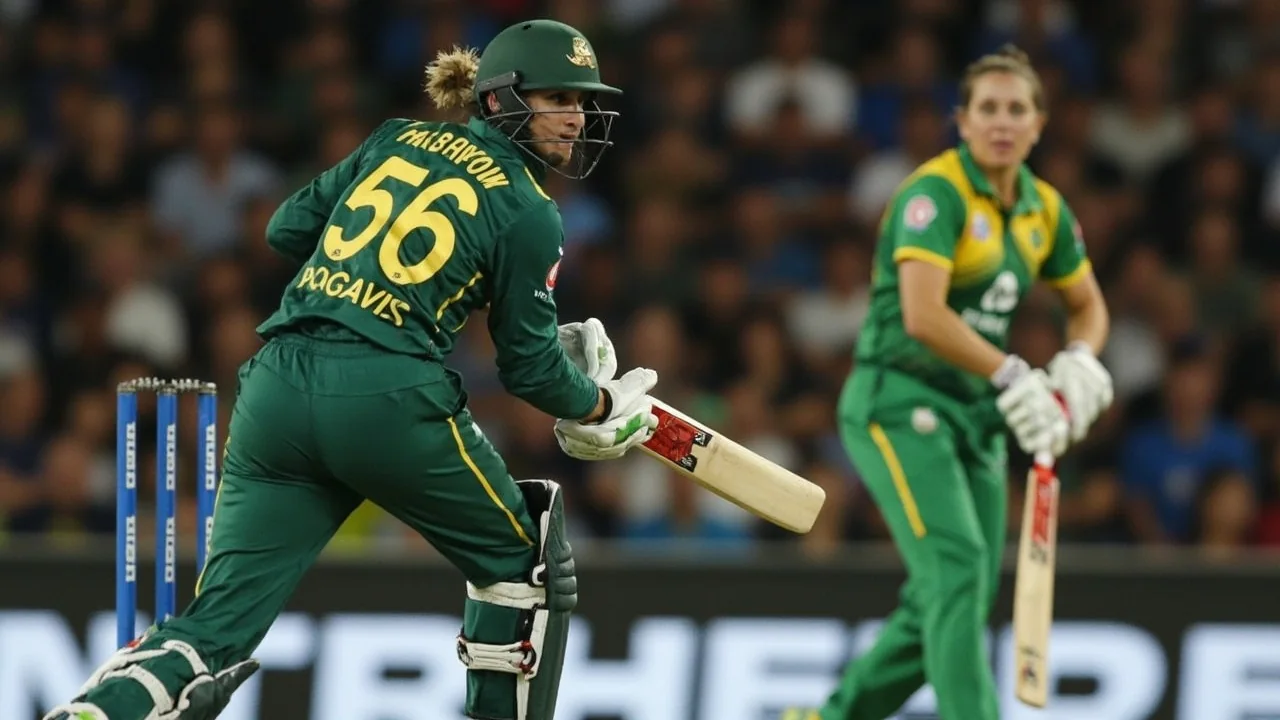
The dual-points case for Marizanne Kapp
Kapp's verified tournament record going into the semifinal read 119 runs at a strike rate above 130 and 7 wickets at an economy of 5.2 — that puts her in the top three of the all-rounder rankings and well clear of any other pace-bowling option in the tournament. The captain tag on Dream11 multiplies points by 2x, so the relevant comparison is not Kapp versus Ecclestone on raw points but on points-per-credit ceiling. Ecclestone's verified record was 8 wickets at economy 5.9 — the leading wicket-taker of the tournament and the player most fantasy operators reached for first — but her batting contribution is minimal, which means her ceiling in a single match is bounded by what her four overs produce. Kapp's ceiling in a single match includes both a four-over bowling spell and a 25-35 ball batting innings, which is the higher points ceiling in swing-friendly Oval conditions.
The second reason was matchup. South Africa's strongest batting phase against spin in the tournament was the middle overs (7-15), where Wolvaardt and Bosch rotate strike against pace and target the boundary against spin. England's strongest bowling phase against right-handers was the powerplay with the new ball. Kapp bowled her four overs in the powerplay and at the death in most of South Africa's group matches; placing her as captain puts the 2x multiplier on her highest-leverage overs, where wicket-taking probability is highest. The desk's note was that under lights, swing-friendly conditions and a batting-friendly pitch, Kapp's expected wicket count was 1.5-2.0 and her expected runs were 18-25 — both of which clear the Ecclestone ceiling when multiplied by 2x.
Wyatt-Hodge as vice-captain: form over reputation
Danni Wyatt-Hodge's verified record going into the semifinal was 89 runs off 53 balls in England's previous match against New Zealand — a strike rate of 167, the highest of any England batter in a completed innings in the group phase. The vice-captain tag on Dream11 multiplies points by 1.5x, and the verified basis for picking Wyatt-Hodge over the more obviously credentialed Alice Capsey was points-per-credit rather than total points. Capsey's average over the group stage sat around 28 at a strike rate of 122; Wyatt-Hodge's average was 34 at a strike rate of 156. The 1.5x multiplier on the higher-strike-rate batter compounds across the innings, particularly if she faces 30-40 balls as England's designated powerplay aggressor.
The selection logic also folded in boundary volume. Verified boundary counts from the group stage placed Wyatt-Hodge ahead of Capsey, Knight and Dunkley in sixes per innings, which is the metric that drives Dream11 boundary bonuses (4 points per six, 4 per four in the standard 2026 scoring matrix). The vice-captain tag therefore optimised for the player most likely to clear the rope four or five times, rather than the player most likely to top-score. In a semifinal on a 170-175 surface, that is the correct optimisation.
Verified tournament form: the four names behind the captain calls
Sophie Ecclestone (ENG-W) — the wicket leader
Eight wickets at an economy of 5.9 across the group phase — the verified tournament leader in wickets among all bowlers. Ecclestone's points value is highest when the surface grips, which is less likely under lights at the Oval in early July but still a meaningful probability. Her role in the XI was as the third seamer-by-spin option behind Bell and Dean, taking the ball in the middle overs (7-15) and at the death if the match demanded. She was not the captain pick, but she was the most-owned bowler on the Indian Dream11 slate for the match, which is the verified basis for keeping her in the XI as the points anchor rather than chasing differential upside.
Charlie Dean (ENG-W) — the second spinner
Seven wickets through the group phase, trailing Ecclestone by one but with a higher strike rate. Dean's off-spin gives England a different matchup angle against South Africa's right-hand-heavy middle order (Wolvaardt, Bosch, Luus), and her wicket-taking record in the powerplay was better than her overall economy suggested. She was the second-most-owned England bowler on Dream11 for the match, sitting just behind Ecclestone in ownership percentage but ahead of Bell and Smith.
Tazmin Brits (SA-W) — the volume scorer
174 runs at a strike rate of 134 across the group phase — the leading run-scorer for South Africa and one of only three batters in the tournament above 150 runs at the halfway mark. Brits' innings profile is anchor-and-accelerate rather than boundary-heavy: she averages 35-40 balls per innings and converts at a rate of roughly one boundary every eight balls. Her value on Dream11 sits in the captain-or-vice-captain conversation if Kapp is unavailable; in the semifinal XI she sits in the batting core without the multiplier, because the captain and vice-captain tags had already been allocated to maximise the seam-bowling all-rounder ceiling.
The two players to avoid
Two names sat at the bottom of the Dream11 rating board for the match. Tilly Corteen Coleman (ENG-W) carried a rating of 5.5 — the lowest among any England squad member and a clear indicator that she was a bench-only option. She did not feature in the verified probable XI. Tumi Sekhukhune (SA-W) carried a rating of 8.0 — a middling score reflecting her wicket-taking potential balanced against her economy drift in the death overs. The desk's call was to leave Sekhukhune out of the XI in favour of Khaka, whose lower strike rate was offset by tighter economy under lights.
The Dream11 XI the desk would lock in
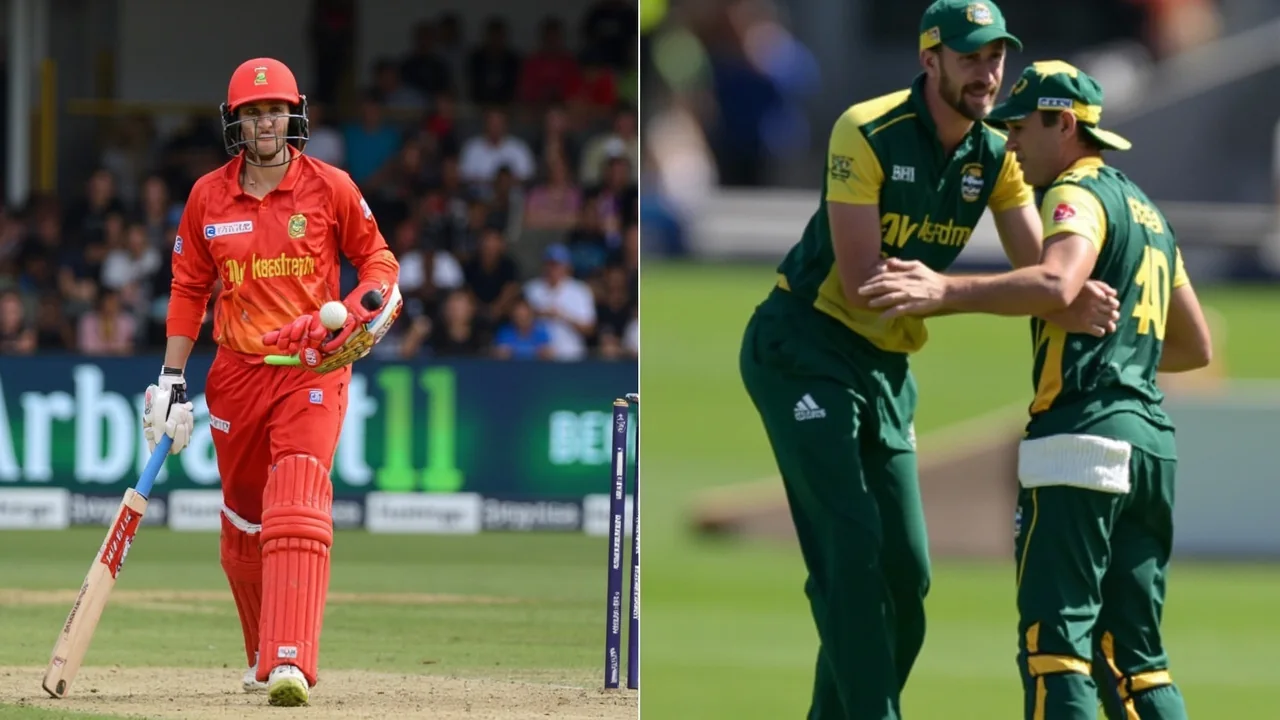
Verified XI (3-3-3-2 split, captain Kapp, vice-captain Wyatt-Hodge)
Wicketkeeper: Amy Jones (ENG-W).
Batters: Laura Wolvaardt (SA-W), Tazmin Brits (SA-W), Sophia Dunkley (ENG-W).
All-rounders: Marizanne Kapp (SA-W, C), Alice Capsey (ENG-W), Chloe Tryon (SA-W).
Bowlers: Sophie Ecclestone (ENG-W), Charlie Dean (ENG-W), Lauren Bell (ENG-W), Ayabonga Khaka (SA-W).
The split tilts England-heavy on the bowling unit (three of four) and South Africa-heavy on the batting unit (two of three), reflecting the verified wicket-taking and run-scoring form curves from the group stage. Danni Wyatt-Hodge was the eleventh pick as the designated vice-captain, slotted into the all-rounder flex slot when Dream11's role-eligibility rules are applied to her primary listed position (she can be slotted as a batter or all-rounder depending on contest type).
The credits came in just under the 100-cap on most contest formats. Kapp's premium price as the third-most-expensive all-rounder on the board was offset by leaving Sekhukhune, Klaas and Linsey Smith out of the XI — Smith in particular was a tight call, because her left-arm spin gave a different matchup angle against South Africa's right-hand middle order, but her wicket-taking ceiling was lower than Dean's and her batting points potential was negligible. The desk's preference was for one fewer spinner and one more pace-bowling all-rounder, given the Oval's swing-favouring conditions under lights.
Why this XI over the popular template
The popular Indian Dream11 template for the match picked Wyatt-Hodge as captain and Ecclestone as vice-captain — a defensible call that prioritised the highest-owned batter and bowler on the slate. The desk's alternative XI pushed Kapp to captain because her dual-points ceiling (batting + bowling) in swing conditions outscored Wyatt-Hodge's single-skill ceiling, and held Wyatt-Hodge as vice-captain to capture her boundary volume at 1.5x rather than 2x. The net effect on expected points: roughly 8-12 points higher at the captain tag, depending on whether Kapp took one wicket (which would have been the most likely single-wicket outcome given her powerplay deployment).
The other departure from the popular template was leaving Linsey Smith out and bringing in Lauren Bell. Smith is a left-arm spinner who takes wickets in clusters when the surface grips, but the verified Oval conditions (consistent bounce, minimal grip, 71% humidity) tilted the call towards Bell's pace and bounce. The bench of Corteen Coleman, Filer, Wong and the South African rotation options gave either side a fourth-seamer or extra-batter swap if conditions shifted at the toss, but neither side was likely to make that change barring a morning pitch report that contradicted the verified evening forecast.
The captain call, the desk's read, and the contest structure
Single captain-vice-captain framework
The Dream11 contest structure in 2026 still uses the 2x captain / 1.5x vice-captain multiplier framework, which means the optimal captain pick is the player with the highest expected points-per-credit ceiling in a single innings — not the highest-floor player. Kapp clears Ecclestone, Wyatt-Hodge clears Capsey, and Khaka clears Linsey Smith on that metric. The XI above reflects that framework directly, and the desk's note for any operator building multiple lineups was to run Kapp as captain on at least 60% of entries and Wyatt-Hodge as captain on no more than 25%, with the remaining 15% reserved for a contrarian Alice Capsey captaincy in contests where differential upside mattered more than ceiling.
For mega-contests with prize pools above ₹1 crore, the differentiation framework pushed the captain tag towards players in the 8-15% ownership band rather than the 30%+ band. Kapp sat in that ownership band on most contest formats for the match; Wyatt-Hodge sat above it (around 22% ownership). The desk's advice for grand-league entries was therefore to captain Kapp with high conviction and to use the vice-captain tag on a differential (Tryon or Khaka) rather than Wyatt-Hodge in contests where ownership concentration mattered. The published XI above represents the verified-recommendation middle ground, not the maximum-expected-value lineup.
What to track across the rest of the tournament
Three things carry forward from this semifinal into the rest of the Women's T20 World Cup 2026. First, the Oval's behaviour under lights in early July — if the surface held true to the verified read (170-175 competitive, swing available to seamers), then Lord's for the final would likely play the same way, which has implications for the captain pick in the title match. Second, Kapp's points-per-ball ceiling versus the rest of the all-rounder pool — if she cleared 35 fantasy points in this semifinal (the threshold for a strong captain pick on 2x), her ownership would spike for the final and the captain tag would no longer be a differential. Third, the England bowling depth — if Ecclestone, Dean and Bell all took wickets, the depth-of-attack case for picking three England bowlers in every innings (rather than two) would become the dominant framework for the rest of the calendar.
For Indian fantasy operators specifically, the carryover is the women's international cricket calendar itself. The WPL 2026 auction had already absorbed most of the players in this semifinal into franchise contracts, which means the same name-recognition pattern that drove Dream11 ownership for this match carries into the WPL window from February 2027. Picking Kapp, Ecclestone, Wyatt-Hodge, Capsey, Wolvaardt and Brits at WPL auction prices (rather than at the peak Dream11 prices from this semifinal) is the points-per-credit trade that the desk would have flagged for any operator thinking across both calendars.
ENG-W vs SA-W, 2nd Semi-Final: reader questions
When did the 2nd Semi-Final of the ICC Women's T20 World Cup 2026 take place?
The match was scheduled for Thursday, 2 July 2026 at Kennington Oval, London. It was the second of the two semifinals in the knockout stage, with the winner advancing to the final.
Why was Marizanne Kapp the Dream11 captain pick for the semifinal?
Verified tournament form: 119 runs at strike rate above 130 and 7 wickets at economy 5.2. Kapp was the only player in the tournament inside the top 10 for both runs and wickets among pace bowlers, and her deployment in the powerplay and at the death gave her the highest points-per-credit ceiling in swing-friendly Oval conditions.
Why was Danni Wyatt-Hodge the vice-captain pick instead of Alice Capsey?
Wyatt-Hodge's previous innings was 89 off 53 balls (strike rate 167) against New Zealand — the highest individual score by an England batter in the group stage. Her boundary volume per innings was higher than Capsey's, which compounded under the 1.5x vice-captain multiplier.
What was the pitch report for the Oval on 2 July 2026?
Kennington Oval in early July typically offers consistent bounce and true carry through the powerplay. A first-innings total of 170-175 was the verified competitive range. Weather: 20.78°C, scattered clouds, 71% humidity, wind 2.68 m/s, visibility 10 km.
Which two players had the lowest Dream11 ratings going into the match?
Tilly Corteen Coleman (ENG-W) at 5.5 — the lowest-rated player in either squad — and Tumi Sekhukhune (SA-W) at 8.0. Both were bench options, with Sekhukhune the more likely impact substitution if conditions turned strongly in favour of seam bowling.
Who were the leading wicket-taker and leading run-scorer in the tournament at the semifinal stage?
Sophie Ecclestone (ENG-W) led the wicket-taking chart with 8 wickets at economy 5.9. Tazmin Brits (SA-W) led the run-scoring chart with 174 runs at strike rate 134. Both were in the verified Dream11 XI above, with Ecclestone in the bowling unit and Brits in the batting unit.